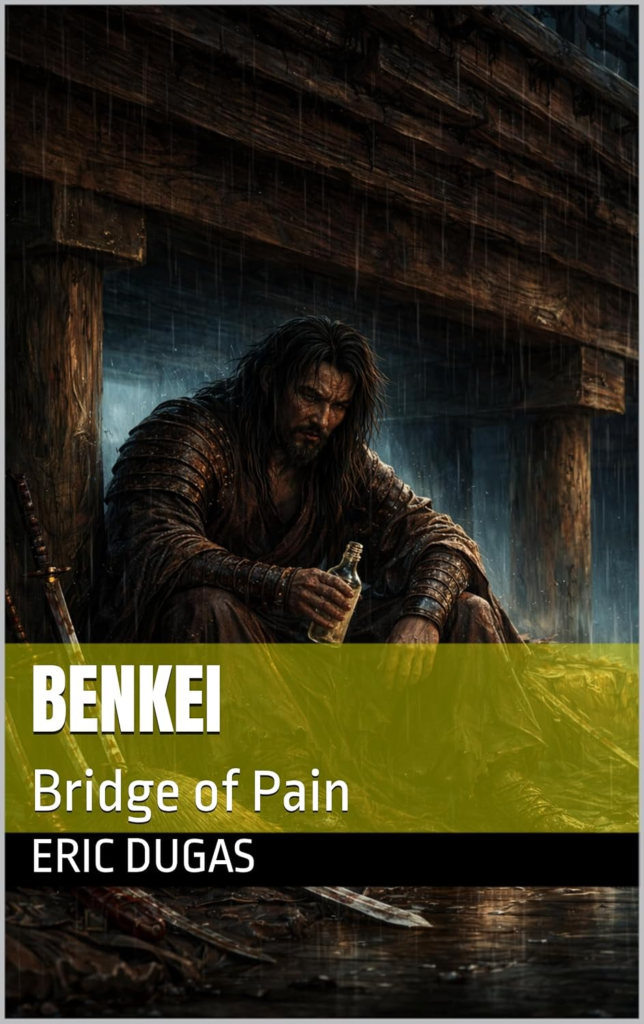
Benkei - Bridge of Pain
This Kindle eBook is now officially available on Amazon
History is a tapestry woven to hide the smell of rot.
The scrolls tell of an age where temples were sanctuaries of enlightenment, and warrior-monks were the holy shields of the Buddha. They speak of the twelfth century as a time of grand bloodlines and poetic duels. But the scrolls were written by men who sat in warm rooms, far from the mud.
The reality was simpler, and much colder.
The great monasteries of Hiei and Nara weren’t just centers of faith; they were human warehouses. They took in the orphans of famine and the unwanted sons of the poor, feeding them just enough to turn them into a standing army that could intimidate the capital. There was no magic in the ring of steel—only the desperate survival of men who had nowhere else to go.
Among these forgotten men, a story began to grow.
The legend says a child was born of a mountain spirit, a giant who shook the rafters of his cradle. The truth was a scream in a dark room and a mother who bled to death because her child was a physical deformity—a freak of nature whose bones grew faster than the world could find a use for them.
The monks didn’t name him Benkei out of honor. They named him out of necessity, a label for a tool they hoped to sharpen. He wasn’t a “sentinel of the sin”; he was a boy who broke everything he touched, trapped in a body that felt like a prison.
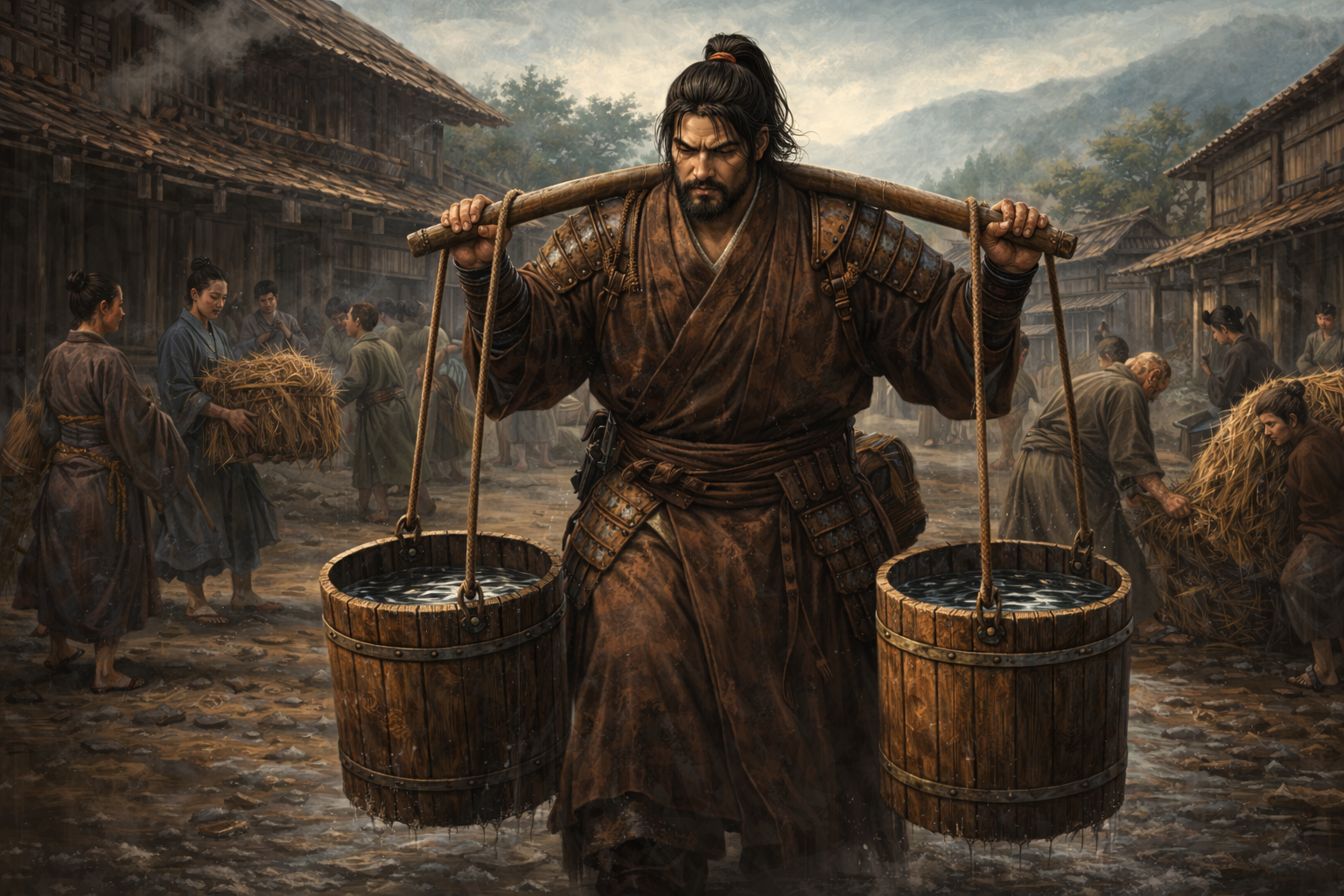
When he finally left the mountain, he didn’t descend to “build a shrine of souls.” He left because he was hungry. He left because he was tired of being a monster in a robe.
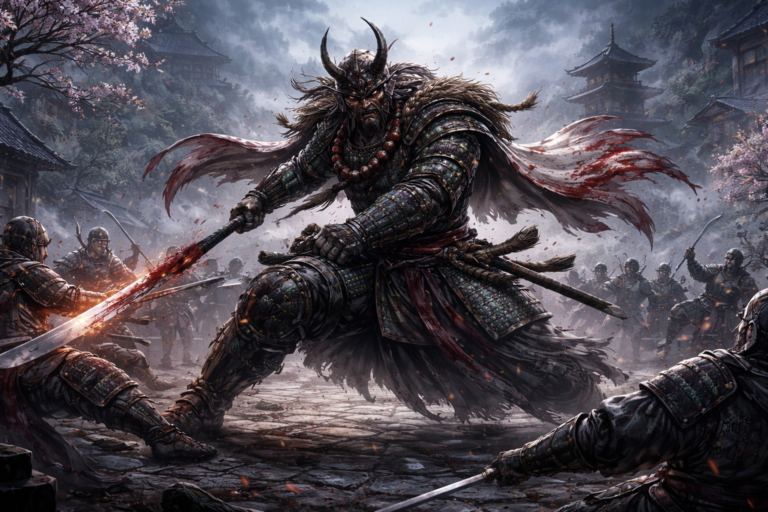
The “Thousand Blades” wasn’t a quest for spiritual truth. It was a scavenger’s tally. In the rain-slicked alleys of Kyoto, a man of his size had two choices: become a legend or starve. He chose to survive, one stolen sword at a time, selling the pride of samurai for bags of rice and cheap sake.
But even a man who has given up on the world can be found.
On a bridge at the edge of the city, the myth was about to collide with a reality even more dangerous than a mountain spirit.
This is the story of the man they called Benkei.
Not the god, not the demon—but the brother who stood when everyone else ran.