
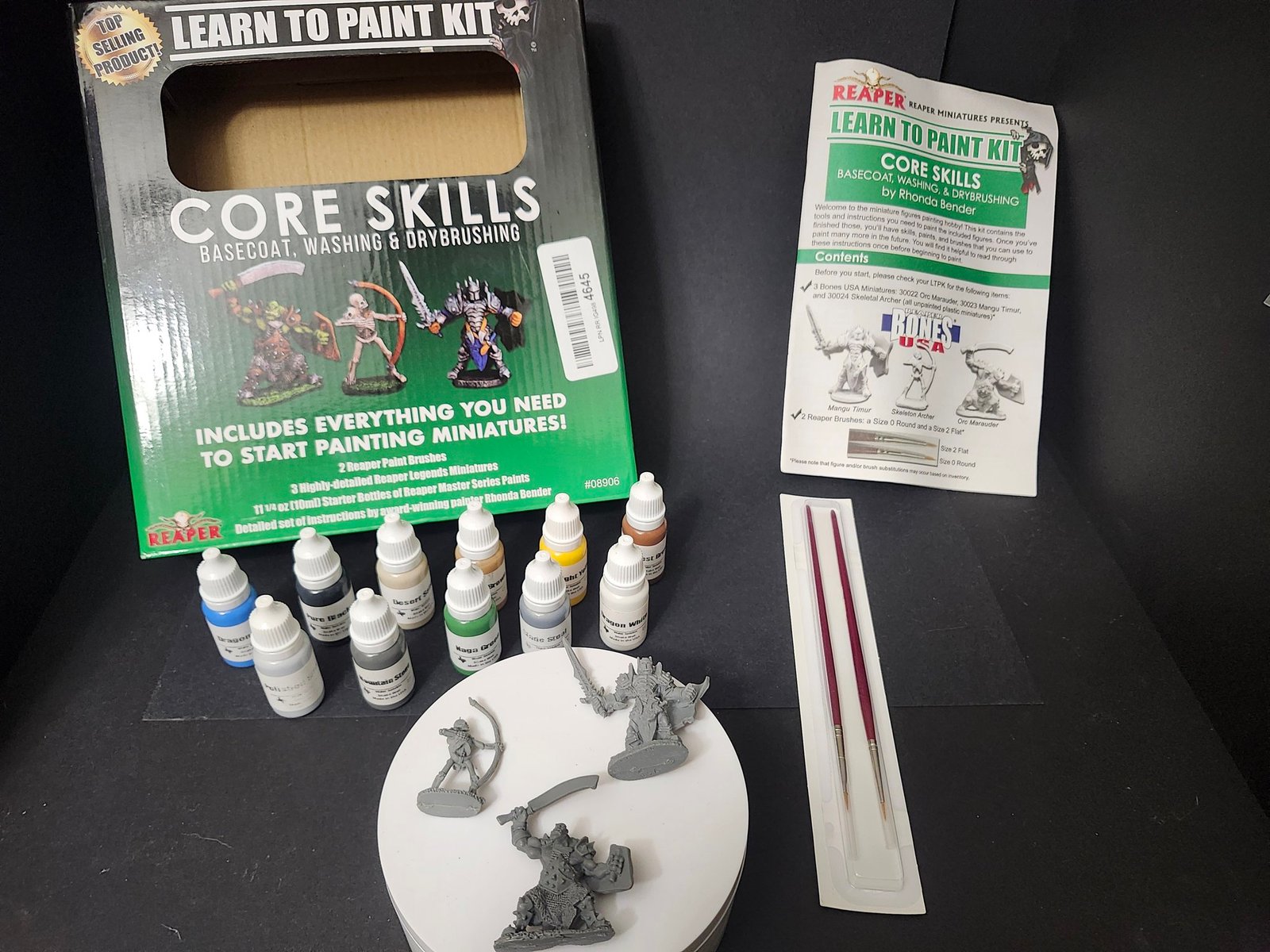
After weeks of research and setting up my workshop, the first real piece of gear has finally arrived.
This box, the Reaper “Learn to Paint” Core Skills Kit, represents the official starting line for my miniature painting journey.
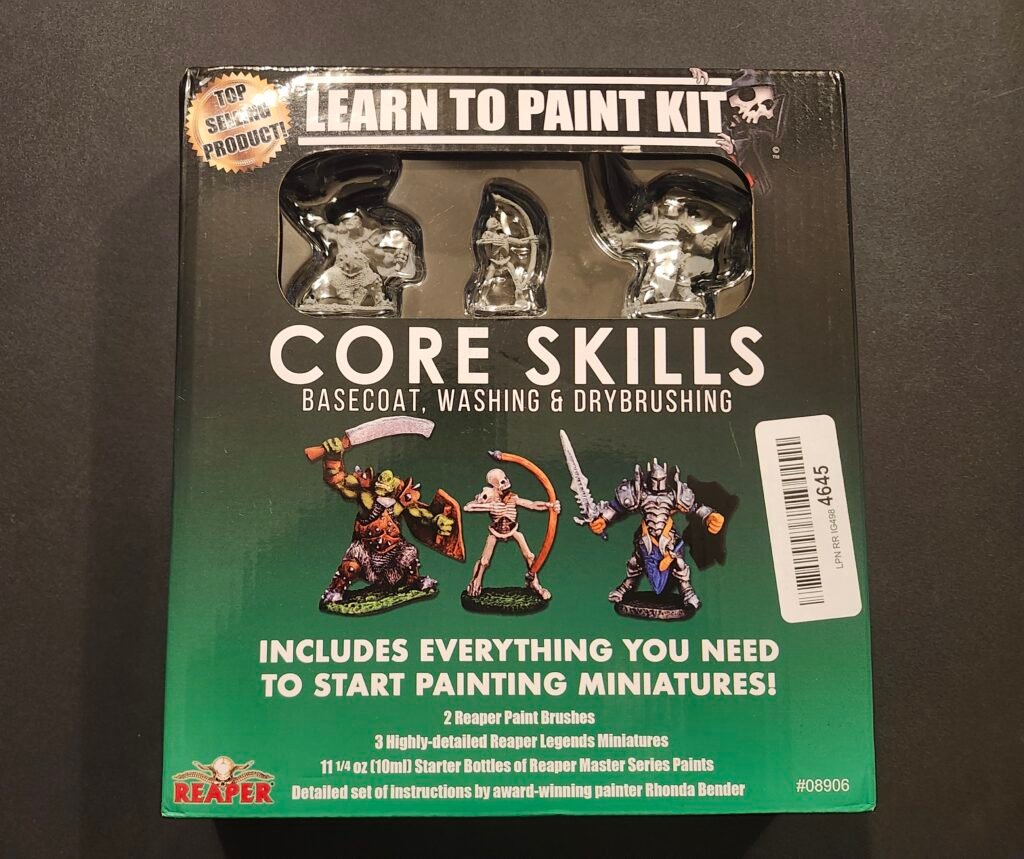
Honestly, I’m just excited to see what I can do. I used to love drawing, and my experience as a welder has given me pretty steady hands. I’m hoping that the fine hand control needed for TIG welding will translate, at least a little, to handling a tiny paintbrush.
My main goal is to create something that captures the feel of the old, “legacy” Heroclix figures I collected for years. They used to be hand-painted, so they weren’t perfect, but they had this matte finish and charm that I always loved. If I can get even close to that, I’ll be happy.
Ultimately, getting good at painting is the crucial next step before I dive into the world of 3D printing. I feel like owning a resin printer will be a complete game-changer, allowing me to create any character I can imagine for my collection. This paint kit is the first real test.
In this post, I’ll be doing a full unboxing and sharing my honest first impressions as a complete beginner looking at the tools of the trade for the first time.
The Unboxing: What’s In The Box?!?! 😛
So, what does a “learn to paint” kit actually come with? After getting the plastic wrap off, here’s the full loadout spread out on the desk.
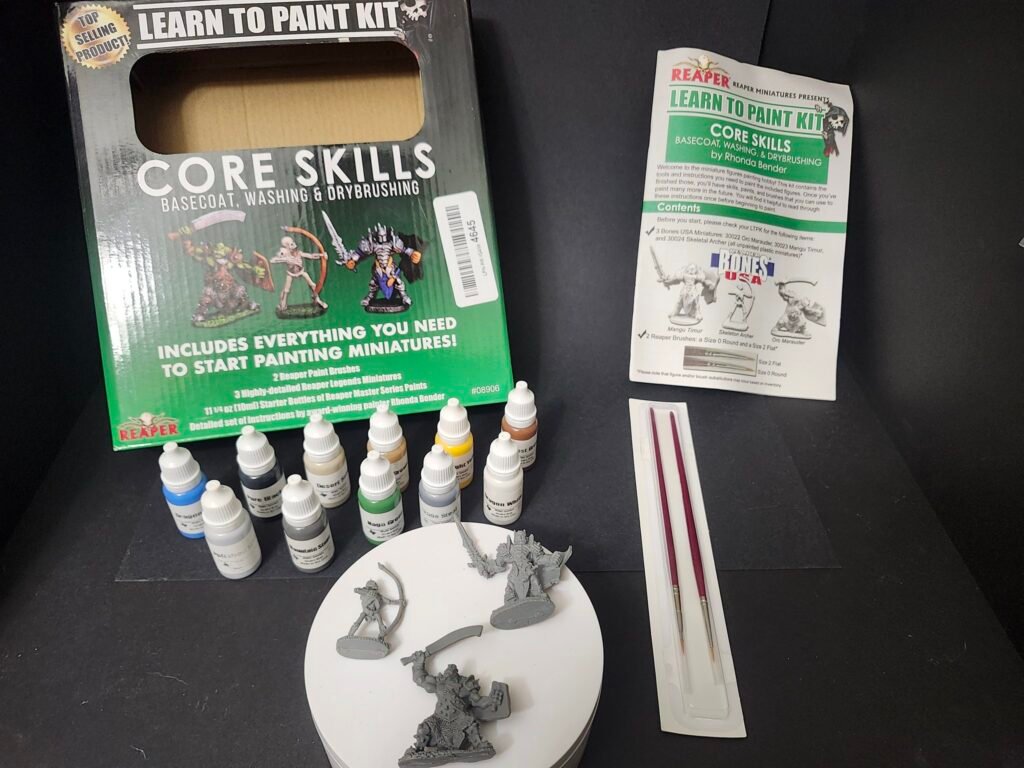
The [Reaper Core Skills Learn to Paint Kit](https://amzn.to/4m0QRUU) comes with what they call “everything you need to start painting miniatures.” As a beginner, I have to take their word for it.
The official contents are:
11 bottles of Reaper Master Series Paints
2 Reaper Paint Brushes (a Size 0 Round and a Size 2 Flat)
3 Reaper Bones Miniatures (an Orc, a Skeleton, and a Knight)
1 Detailed Instruction Guide
My first impression is that it feels like a solid, no-fluff starting package. There’s no fancy packaging inside, just the tools you need to get the job done. In the next sections, we’ll take a closer look at the actual miniatures and the instruction guide that promises to teach me how to use all this stuff.
The “Victims”: A Closer Look
The kit comes with three classic fantasy miniatures, all from Reaper’s “Bones USA” line of unpainted plastic models. As someone who has only ever collected pre-painted Heroclix, this is my first time handling true “hobby” miniatures meant for painting.
Here are the test subjects of my first painting attempts:
Mangu Timur, the Knight:
This is a seriously imposing figure. The armor is covered in sharp edges and details. This one looks the most intimidating to paint.
The Skeleton Archer:
A classic fantasy staple. It seems a bit more straightforward, but the rib cage and bow look delicate and will probably be a challenge. This is the one the guide teaches you how to paint.
The Orc Marauder:
This one has a great, dynamic pose. The focus here seems to be on organic textures like skin and leather, which will be a completely new experience for me.
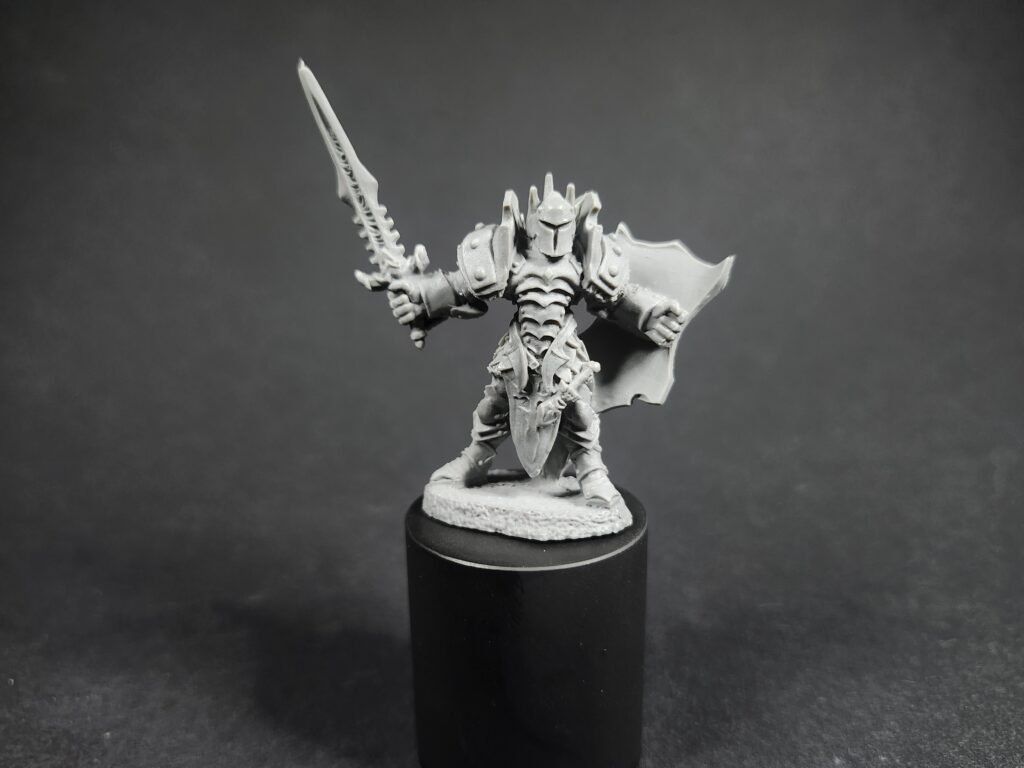
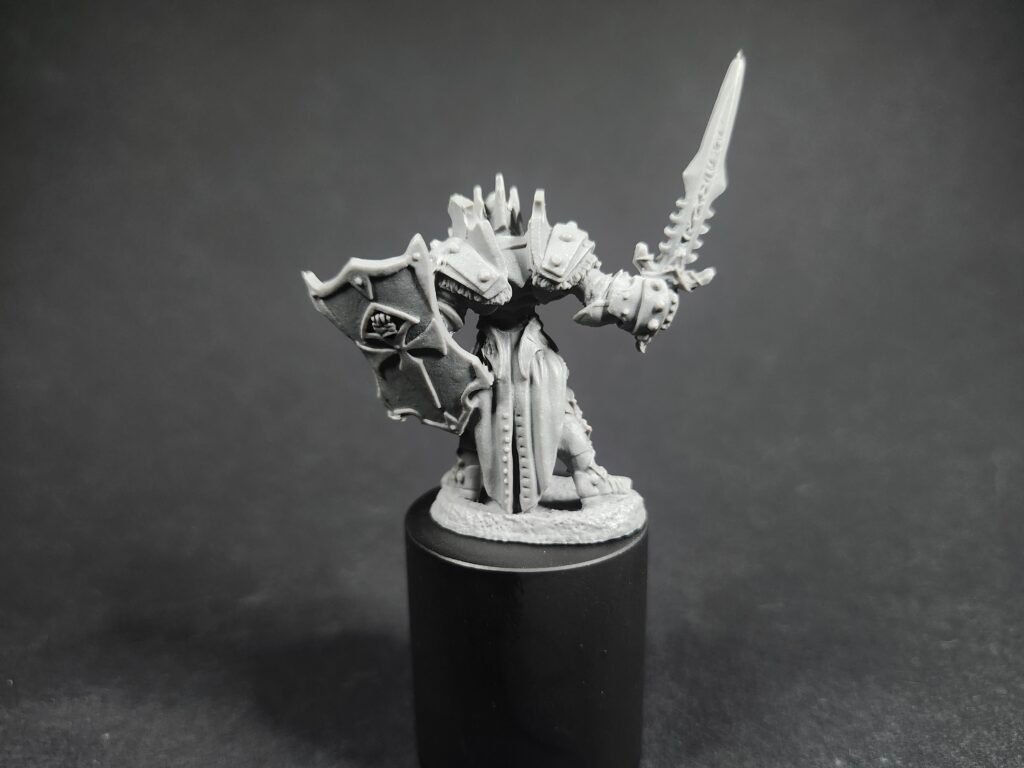
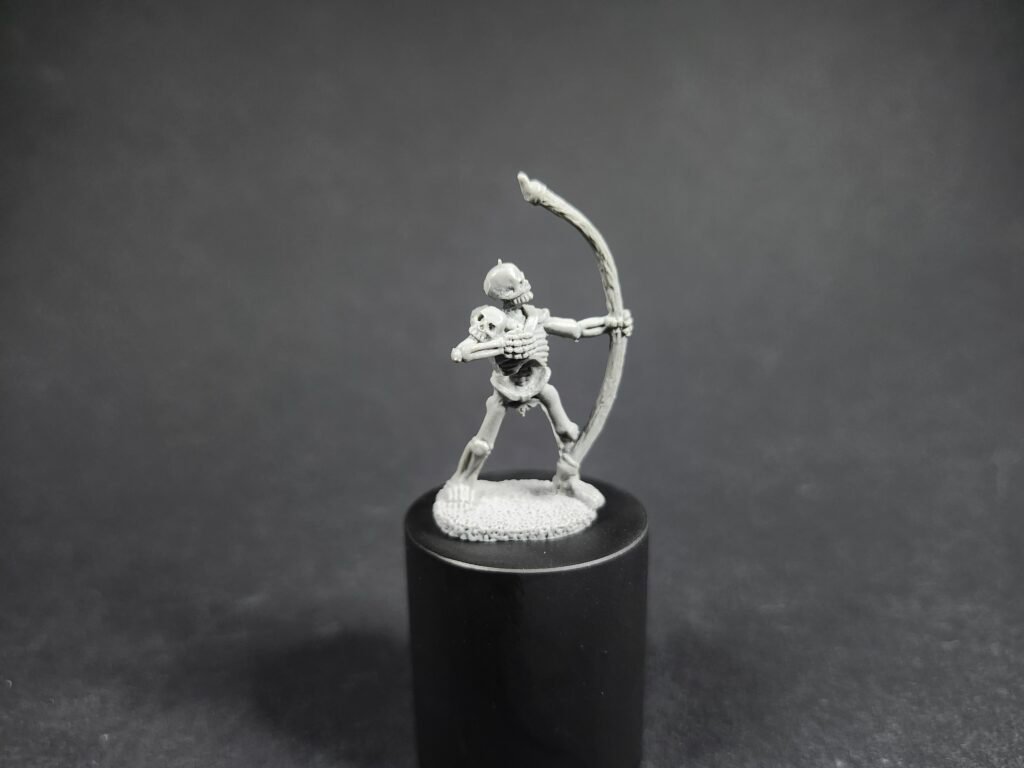
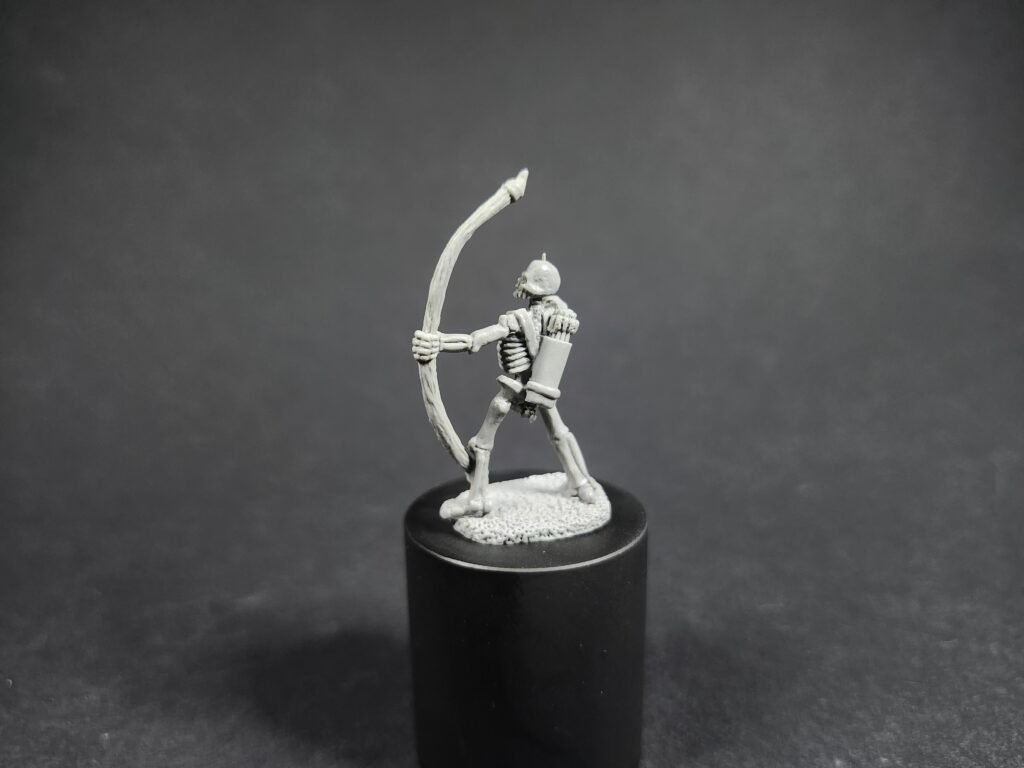
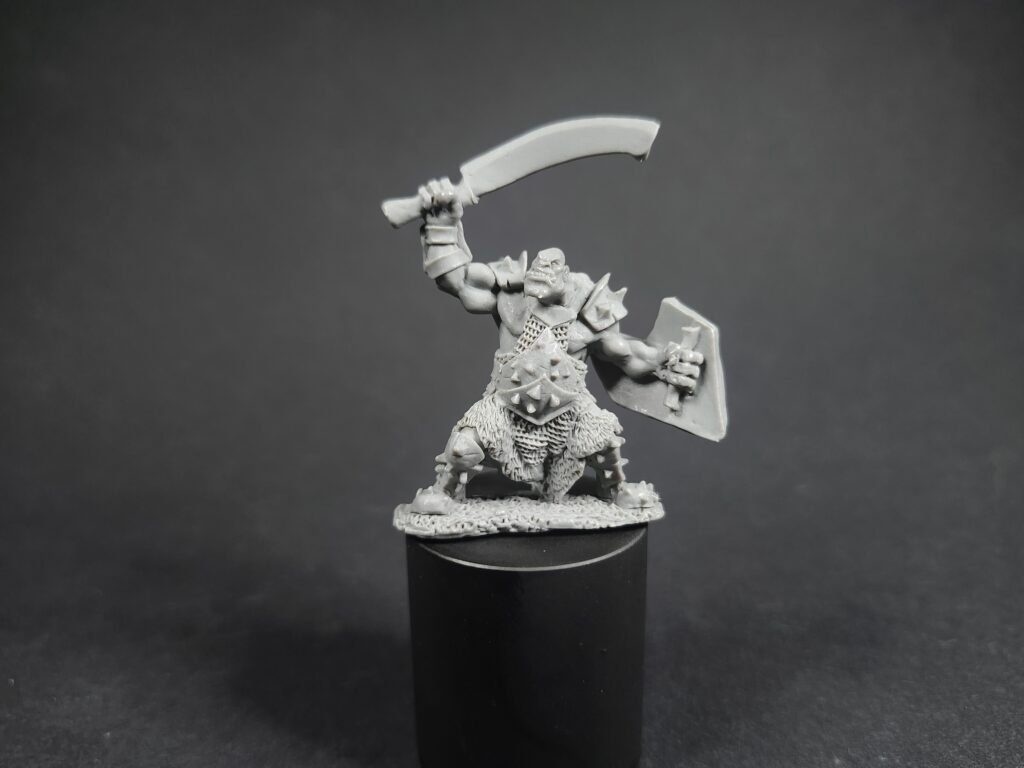
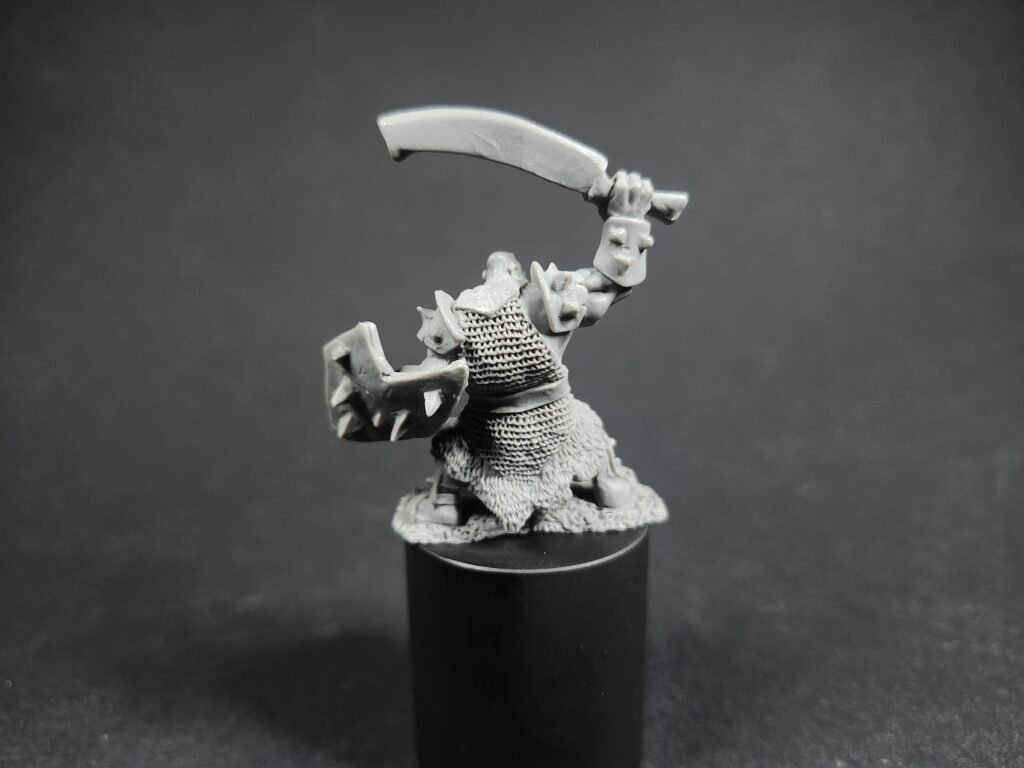
My first impression of the models is that they are very rigid and the details are much sharper than I expected. There are some minor “mold lines” from the manufacturing process that the guide says I’ll need to clean off, which is another new step for me. Overall, they look like a fantastic set of test subjects for this experiment.
The Arsenal: Paints & Brushes
A miniature is just a piece of plastic without the tools to bring it to life. The kit comes with a curated set of 11 paints and 2 brushes, which is supposed to be everything I need for these first three models.
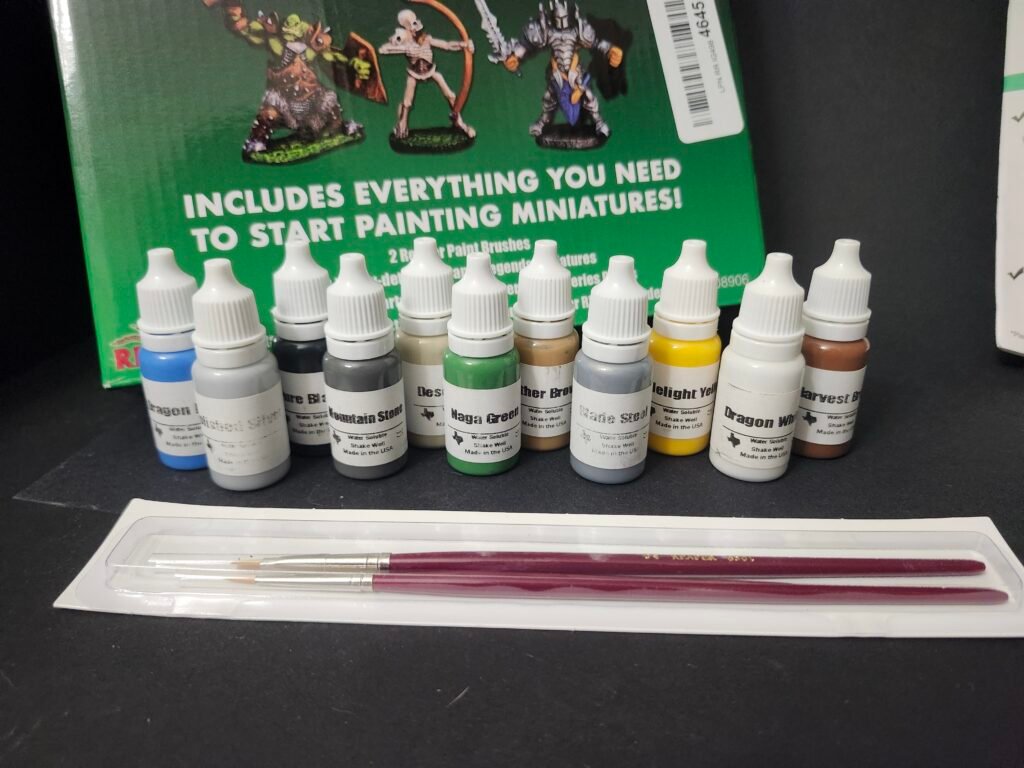
The paints are from Reaper’s “Master Series” line. The kit includes a solid range of foundational colours: a metallic silver, a gold, some classic fantasy greens and blues, and essential neutrals like black, white, and a few browns for leather and bone. As a complete beginner, having this pre-selected palette is a huge relief—I wouldn’t have known where to start otherwise. They come in dropper bottles, which I’ve learned is a big advantage for controlling how much paint you use.
The kit also includes two Reaper brushes:
A Size 2 Flat and a Size 0 Round.
The guide explains that the flat brush is for covering large areas quickly (basecoating), and the smaller round brush is for details. They feel like good quality, but the real test will be how they handle when I actually put them to use.
The Blueprint: The Instruction Guide
This is probably the most important part of the entire kit for a beginner like me. It’s a detailed, multi-page instruction booklet written by award-winning professional painter, Rhonda Bender.
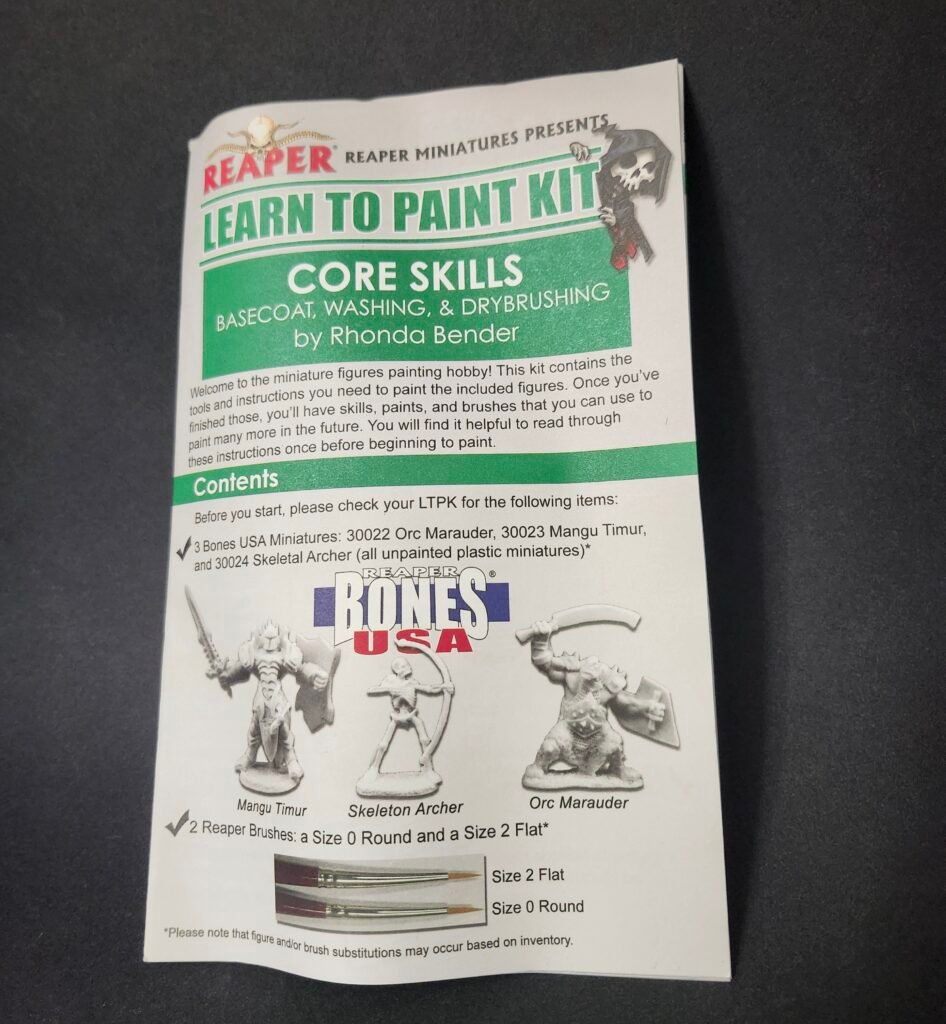
The guide promises to teach the “Core Skills” of miniature painting:
Basecoating, Washing, and Drybrushing.
It uses the Skeleton Archer as the test subject and provides a full, step-by-step walkthrough with pictures for each stage of the process.
As I decided earlier, to give this kit a truly fair test, this booklet is the only instruction I will be using to paint my first miniature. I’m not going to watch any supplemental YouTube tutorials or read other guides. I’m going in blind, armed only with this booklet.
We’re going to find out together how well it can guide a true novice from a piece of grey plastic to a finished model.
The Verdict: First Impressions & What’s Next?
So, what are my final thoughts on the Reaper “Learn to Paint” Core Skills Kit after getting it all unboxed? Honestly, I’m impressed and a little intimidated.
The kit feels like a solid, no-nonsense package. There are no frills, just what appears to be a well-chosen set of quality tools and a clear, focused instruction manual. For a beginner who is overwhelmed by the sheer number of paints and brushes on the market, having this curated “starter pack” is a huge relief. It removes the guesswork and lets you get straight to the hobby.
The intimidating part, of course, is the task ahead. The tools are on the table, the instructions are read, and the grey plastic miniatures are staring back at me. The only thing left to do is take a deep breath and see if I can actually do this.


What an exciting adventure! Wishing you good luck with your first attempt at painting a miniature. I’m looking forward to seeing the results.
-Carcass.
Hey Carcass, thanks so much for the comment! It’s actually the first one on the site, so it definitely made my day.
Appreciate the good luck wishes—I’ll probably need them when it comes to the tiny details, haha. The pressure is on now to produce something decent!
I’ll be posting the results soon, for better or worse. Hope you’ll stick around for the rest of the journey. Cheers!